Library

Videos, papers & books

A curated list — not an endorsement list. We include advocates, critics and neutral researchers so you can hear the strongest version of each argument. Each entry notes why it's worth your time and what to watch out for.

Paper

Supportive Paper · 2021

Behavioral Characteristics and Self-Reported Health Status among 2029 Adults Consuming a "Carnivore Diet"

Belinda Lennerz, MD, PhD; David Ludwig, MD, PhD et al., Boston Children's Hospital / Harvard Medical School

An online survey of 2,029 adults who had followed a carnivore diet for at least six months. Respondents reported high satisfaction, few adverse effects and improvements in weight, diabetes markers and general wellbeing; self-reported LDL cholesterol was markedly elevated.

Why it's here: The largest dataset on carnivore eaters to date, but read it knowing the sample was recruited from carnivore social media and all outcomes were self-reported.

Paper

Critical Paper · 2022

Limitations of Self-reported Health Status and Metabolic Markers among Adults Consuming a "Carnivore Diet"

R. Kirwan et al., nutrition researchers (letter to the editor, Current Developments in Nutrition)

A published critique of the 2,029-person carnivore survey. It argues that selection bias, survivorship bias and unverified self-reported lab values make the favourable findings hard to interpret, and that the LDL rise deserves more concern. The original authors published a reply in the same issue.

Why it's here: Read it alongside the survey itself: the pair is a compact lesson in what self-selected online surveys can and cannot tell you.

Paper

Neutral Paper · 1930

Clinical Calorimetry XLV: Prolonged Meat Diets with a Study of Kidney Function and Ketosis

Walter S. McClellan & Eugene F. Du Bois, MD, Russell Sage Institute of Pathology / Bellevue Hospital, New York

The report of the Bellevue experiment, in which Arctic explorer Vilhjalmur Stefansson and a colleague ate only meat and fat for a year under medical supervision. The authors tracked kidney function, ketosis, vitamin status and general health and found no clear harm over that period.

Why it's here: The original primary source behind many carnivore claims; note it covers just two men, and the study was funded by the Institute of American Meat Packers.

Paper

Neutral Paper · 2014

Diet rapidly and reproducibly alters the human gut microbiome

Lawrence A. David, PhD; Peter J. Turnbaugh, PhD et al., Harvard University (Nature)

Volunteers switched for five days between an entirely animal-based diet and a plant-based diet. The animal-based diet shifted the gut microbiome within days, raising bile-tolerant microbes such as Bilophila wadsworthia and lowering fibre-fermenting species.

Why it's here: The most-cited controlled look at what an all-animal diet does to gut bacteria; short-term and small, so it shows how fast the gut changes, not long-term health outcomes.

Paper

Neutral Paper · 2022

Elevated LDL Cholesterol with a Carbohydrate-Restricted Diet: Evidence for a "Lean Mass Hyper-Responder" Phenotype

Nicholas Norwitz, PhD; David Feldman; Adrian Soto-Mota, MD, PhD; Tro Kalayjian, DO; David Ludwig, MD, PhD (Harvard Medical School)

Using data from the carnivore survey cohort, the authors show that the leanest and most metabolically healthy low-carb eaters (low triglycerides, high HDL) tend to see the largest LDL increases. Case reports suggest modest carbohydrate reintroduction can bring extreme LDL back down.

Why it's here: Essential if you are lean and your LDL jumped on carnivore; pair it with the critical reply that follows, as cardiovascular risk in this group is still unresolved.

Paper

Critical Paper · 2022

Evidence for a Lean Mass Hyperresponder Phenotype Is Lacking with Increases in LDL Cholesterol of Clinical Significance in All Categories of Response to a Carbohydrate-Restricted Diet

M. Mindrum (letter to the editor, Current Developments in Nutrition)

A published challenge to the lean mass hyper-responder paper. It argues the data do not support a distinct phenotype and that clinically meaningful LDL increases occurred across all groups, not only lean individuals.

Why it's here: A direct counter-argument to the LMHR idea, published with a reply from the original authors in the same journal.

Paper

Neutral Paper · 2024

Carbohydrate Restriction-Induced Elevations in LDL-Cholesterol and Atherosclerosis: The KETO Trial

Matthew Budoff, MD (cardiologist, Lundquist Institute) et al., with Nicholas Norwitz and David Feldman (JACC: Advances)

Coronary CT angiography in 80 long-term ketogenic dieters with LDL of 190 mg/dL or more, compared with 80 matched controls from the Miami Heart cohort. Despite average LDL of roughly 272 versus 123 mg/dL, plaque burden did not differ significantly between the groups.

Why it's here: Widely quoted by both sides; it is a cross-sectional snapshot of a self-selected group, and a later longitudinal KETO-CTA paper in the same journal was retracted, so read the commentary before drawing conclusions.

Book

Supportive Book · 1936

Adventures in Diet (reprinted from Harper's Magazine, 1935-36)

Vilhjalmur Stefansson, Arctic explorer and ethnologist

Stefansson recounts years of living on a mostly meat-and-fish diet with Inuit communities and his supervised year of eating only meat at Bellevue Hospital. Originally a three-part Harper's series, it is free to read on the Internet Archive.

Why it's here: A foundational first-person account, but it is anecdote rather than evidence, and this reprint was distributed by the Institute of American Meat Packers.

Book

Supportive Book · 2024

Change Your Diet, Change Your Mind

Georgia Ede, MD, Harvard-trained psychiatrist specialising in nutritional psychiatry

Ede argues that diet influences brain health, mood and memory, and makes the case for low-carbohydrate, whole-food, animal-forward eating (including ketogenic and meat-based approaches) for mental health. It includes practical plans and discussion of plant compounds that may affect some people.

Why it's here: The most clinically grounded book-length case for animal-based eating and mental health; much of the psychiatric evidence is still early-stage, which she acknowledges.

Neutral Lecture

Published Research on Carnivore, Ketogenic and Carbohydrate Restricted Diets

Belinda Lennerz, MD, PhD, paediatric endocrinologist, Boston Children's Hospital / Harvard Medical School (Low Carb Down Under)

The lead author of the 2,029-person carnivore survey walks through her published work on carnivore, ketogenic and carbohydrate-restricted diets. She covers what the data show, how they were collected and the open questions they raise.

Why it's here: Hear the study's methods and caveats from the researcher who ran it, rather than second-hand from advocates or critics.

Supportive Lecture

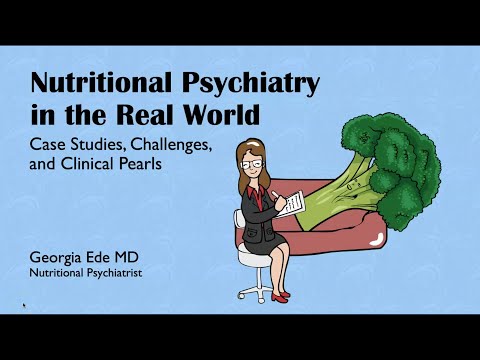
Nutritional Psychiatry in the Real World

Georgia Ede, MD, psychiatrist (Low Carb Down Under)

A conference talk on using dietary change, including ketogenic and animal-based diets, with psychiatric patients in clinical practice. Ede discusses mechanisms, case experience and practical challenges.

Why it's here: A clinician's view of how dietary psychiatry works with real patients; watch for the distinction she draws between clinical experience and trial evidence.

Supportive Lecture

Demystifying the Carnivore Diet

Shawn Baker, MD, orthopaedic surgeon and author of The Carnivore Diet (Low Carb Conferences)

Baker, one of the people most associated with popularising the carnivore diet, presents his rationale for an all-meat diet at a low-carb medical conference. He covers anecdotal outcomes, evolutionary arguments and common objections.

Why it's here: A clear statement of the pro-carnivore case from its best-known advocate; notice how much rests on anecdote and self-report rather than controlled trials.

Supportive Lecture

Why We Are Carnivores (slide presentation)

Anthony Chaffee, MD, physician and carnivore advocate

A slide presentation on anthropological, evolutionary and physiological arguments that humans are adapted to eat mainly or only animal foods. Chaffee also covers his views on plant defence compounds.

Why it's here: The strongest version of the evolutionary argument; watch critically, as several claims (for example, that plants are unnecessary for everyone) go beyond what current studies show.

Supportive Podcast

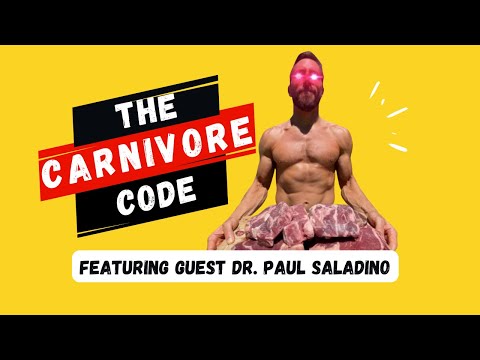
B.rad Podcast: Dr. Paul Saladino, The Carnivore Code

Paul Saladino, MD, psychiatry-trained physician and author of The Carnivore Code (interviewed by Brad Kearns)

A long-form interview about Saladino's book The Carnivore Code, covering plant toxins, organ meats, nutrient density and his personal experience. It reflects his strict carnivore period.

Why it's here: Useful for understanding the plant-toxin argument; note that Saladino later moved to an "animal-based" diet that includes fruit and honey.

Supportive Video

Dr Ken Berry: The Biggest Carnivore Diet Mistakes (Full Interview)

Ken Berry, MD, family physician and author of Lies My Doctor Told Me (interviewed by Max German)

Berry covers carnivore basics, the mistakes he sees beginners make, and his views on fruit and other foods. He draws mainly on his experience as a rural family physician.

Why it's here: A practical starting point for beginners; his views come from clinical experience rather than published trials.

Neutral Podcast

What are LMHRs (Lean Mass Hyper-Responders)?

Dave Feldman (engineer, Citizen Science Foundation), Nick Norwitz, PhD, and Dominic D'Agostino, PhD (University of South Florida) on the Levels podcast

The researchers behind the lean mass hyper-responder idea explain why some lean, active people on low-carb or carnivore diets see very large LDL rises. They cover the proposed lipid energy model and the research designed to test it.

Why it's here: The clearest explanation of the LMHR hypothesis from its proponents; balance it with the critical papers and videos in this library.

Critical Podcast

A review of the "Carnivore diet"

Peter Attia, MD, and Stephan Guyenet, PhD, neuroscientist and obesity researcher (The Drive)

Attia and Guyenet discuss what the evidence does and does not show about the carnivore diet. They cover why people may feel better (elimination of processed food, weight loss) and their concerns about LDL, fibre and long-term risk.

Why it's here: A measured, evidence-focused critique from two respected researchers who are not anti-meat.

Critical Podcast · 2024

No One Would Try the Carnivore Diet If They Knew This

Layne Norton, PhD (nutritional sciences), with Rhonda Patrick, PhD (FoundMyFitness)

Norton argues that people with gut or autoimmune issues often feel better on carnivore because it works as an elimination diet, not because plants are harmful. He reviews evidence for fibre and plant foods and recommends reintroducing foods one at a time.

Why it's here: The ideal counterpoint for anyone who felt better on carnivore and wonders why; the title is clickbait, the content is not.

Critical Podcast

The Truth About Carnivore Diet Results for your Health ft. Nutrition Made Simple

Gil Carvalho, MD, PhD (Nutrition Made Simple), interviewed by Rena Malik, MD

Carvalho, a physician-scientist known for evidence reviews, goes through the research cited for and against the carnivore diet. He discusses the limits of the survey data, short-term versus long-term effects, and what the broader nutrition literature suggests.

Why it's here: A careful skeptic who explains study quality in plain language; useful for learning how to weigh the evidence yourself.

Suggest a source. Know a well-referenced talk, paper or book we should consider — for or against? Tell us. We add items that cite their evidence and disclose conflicts of interest.